Nameberry Alternatives: 4 Other Places to Find a Name
Summary
If you're comparing Nameberry alternatives, the honest split is: Behind the Name for verified etymology, Nameling for sound-alike names, and BabyCenter or The Bump if you want a partner-matching tool bundled into a wider parenting app. We tested all four against Nameberry directly, on price, discovery method, partner tools, and how deep the name information actually goes, before naming a winner for most readers.
Most Nameberry alternatives fall into two very different camps: sites built to help you find a name, and sites built to tell you what one actually means. Nameberry tries to do a bit of both, which is part of why people go looking elsewhere once the swiping feels repetitive or the trend talk gets loud. We spent a week testing four real options against it: BabyCenter Baby Names, The Bump's Baby Names Finder, Behind the Name, and Nameling.
Behind the Name is the one to open when you need to confirm what a name actually means, sourced instead of guessed at. Nameling is for the narrower job of finding names that sound like one you already love. BabyCenter and The Bump both bundle names into a wider parenting app with a partner-comparison tool built in. Of the four, The Bump Baby Names Finder does the most: deeper filters, a free partner matcher, and rhyme-and-monogram checks Nameberry doesn't offer.
Why people start looking past Nameberry
Nameberry earned its spot as the default name site for a reason. It's been publishing trend guides and running an active name forum since long before "baby name app" was its own category, and none of that makes it the only stop worth making. Some readers want a second, less opinion-forward source for a meaning. Others have burned through the app's 50 free swipes and don't want to pay for the rest.
A few just want to test a name against their own surname, not against next year's trend list. That's a different job than the one Nameberry is built for, and it's a fair reason to look somewhere else for it.
What actually separates the four alternatives
The honest differences aren't about which site has "more" names. All five databases overlap heavily on the names themselves. What differs is the job each tool is built for: matching a meaning, matching a sound, or matching two people's taste to each other. The table above breaks down price, discovery method, partner tools, and etymology depth side by side, so start there if you already know which gap you're filling.
BabyCenter Baby Names: the one that comes with a whole parenting app
BabyCenter's names tool works the way a lot of people already search: swipe, refine, swipe again. Add your surname and it previews the full name, which catches problems a bare first name hides. Say a name aloud with the surname attached and a lot of near-misses reveal themselves fast, before you've told anyone your shortlist.
The partner-code feature is the real draw here. Link a second account and compare shortlists without either person seeing the other's picks until you both choose to reveal them. Where it thins out is depth: an entry might give you an origin and a one-line meaning, not the layered etymology a linguist would give you. If you're already inside BabyCenter for pregnancy tracking, adding names costs nothing extra. If you came from Nameberry specifically for the forums, this won't replace them; BabyCenter's groups are broader and less name-focused.
The Bump Baby Names Finder: the practical checks Nameberry skips
The Bump's finder covers the expected filters: gender, origin, style, syllable count. What sets it apart is the practical layer on top of that: a rhyme check, a monogram check, and a "playground popularity" estimate that goes beyond a single national ranking number. Say the shortlisted name out loud next to your surname and the tool will flag it if the initials spell something awkward, before you find out the hard way.
The Baby Name Matcher plays the same swipe-and-match game as Nameberry's app and BabyCenter's tool, and it's free rather than gated behind a one-time unlock. The tradeoff: some list content clearly recycles across The Bump's sister sites in the same parenting-media network, so a few of the themed lists will feel familiar if you've already read similar roundups elsewhere.
Behind the Name: when you need the actual etymology
Behind the Name reads like a reference book because it is one. Linguist Mike Campbell has maintained it since 1996, and entries include the source language, the literal root meaning, historical usage, and variant spellings across cultures, sourced rather than asserted. Run a name through the site's pronunciation guides and you'll often hear why a particular spelling exists at all.
There's no swipe app here, no partner mode, no personalization. That's the point. It's a place to fact-check a claim you read somewhere else, not to discover new names. If a name list tells you a name "means warrior" and you want to know whether that's actually true, this is where you check it.
Nameling: for when you already have one name you love
Nameling does one thing: you type a name, and it returns names that behave similarly, based on real co-occurrence data rather than alphabetical proximity or editorial taste. It started in 2012 as one father's search for a name for his second daughter, before becoming a research project at the University of Kassel; the current version is a lighter 2026 relaunch built around the same original idea.
There's no meaning and no origin story attached to the results themselves, and its name coverage is smaller than the commercial sites above. Pair it with Behind the Name if you want both the sound-alikes and the etymology in a single pass.
How we compared them
We built a shortlist of twelve names across three styles (classic, nature-inspired, short-and-punchy) and ran each one through all five tools: Nameberry, BabyCenter, The Bump, Behind the Name, and Nameling. For each, we logged how the tool handled the same name, whether a partner-comparison feature existed and how it actually worked, what a free account unlocked versus a paid one, and how deep the etymology went past a one-line meaning. Pricing and feature claims were checked directly against each site's current pages in August 2026, not against older reviews or app-store listings.
Where to start, depending on what's missing
If the gap is meaning, start with Behind the Name. If it's sound, start with Nameling. If you and a partner keep landing on different shortlists, BabyCenter's and The Bump's matching tools solve the same problem Nameberry's own Naming Partners mode does, just inside a different app.
That back-and-forth between two people trying to agree is exactly what Partner Sync is for here at bundleofjoy: two shortlists, one shared list, no app purchase required just to see where they overlap.
At-a-glance
| The Bump Baby Names Finder | BabyCenter Baby Names | Behind the Name | Nameling | |
|---|---|---|---|---|
| Price | Free, ad-supported | Free, ad-supported | Free (account free for extra features) | Free, no ads, no account |
| How you find names | Filtered search plus Baby Name Matcher game | Swipe rating plus theme/origin browse | Structured database browse and search | Algorithmic "find similar names" search |
| Compare picks with a partner | Yes, Baby Name Matcher pairs accounts | Yes, partner code links two accounts | No built-in partner feature | No |
| Etymology depth | Light to moderate, plus rhyme/monogram checks | Light, short meaning and origin blurbs | Deep, linguistic root, variants, historical usage | None, no meanings or origin data shown |
| Best for | Practical checks: rhyme, initials, popularity | Parents already in the BabyCenter app | Verifying a name's real origin and meaning | Finding sound-alikes to a name you love |
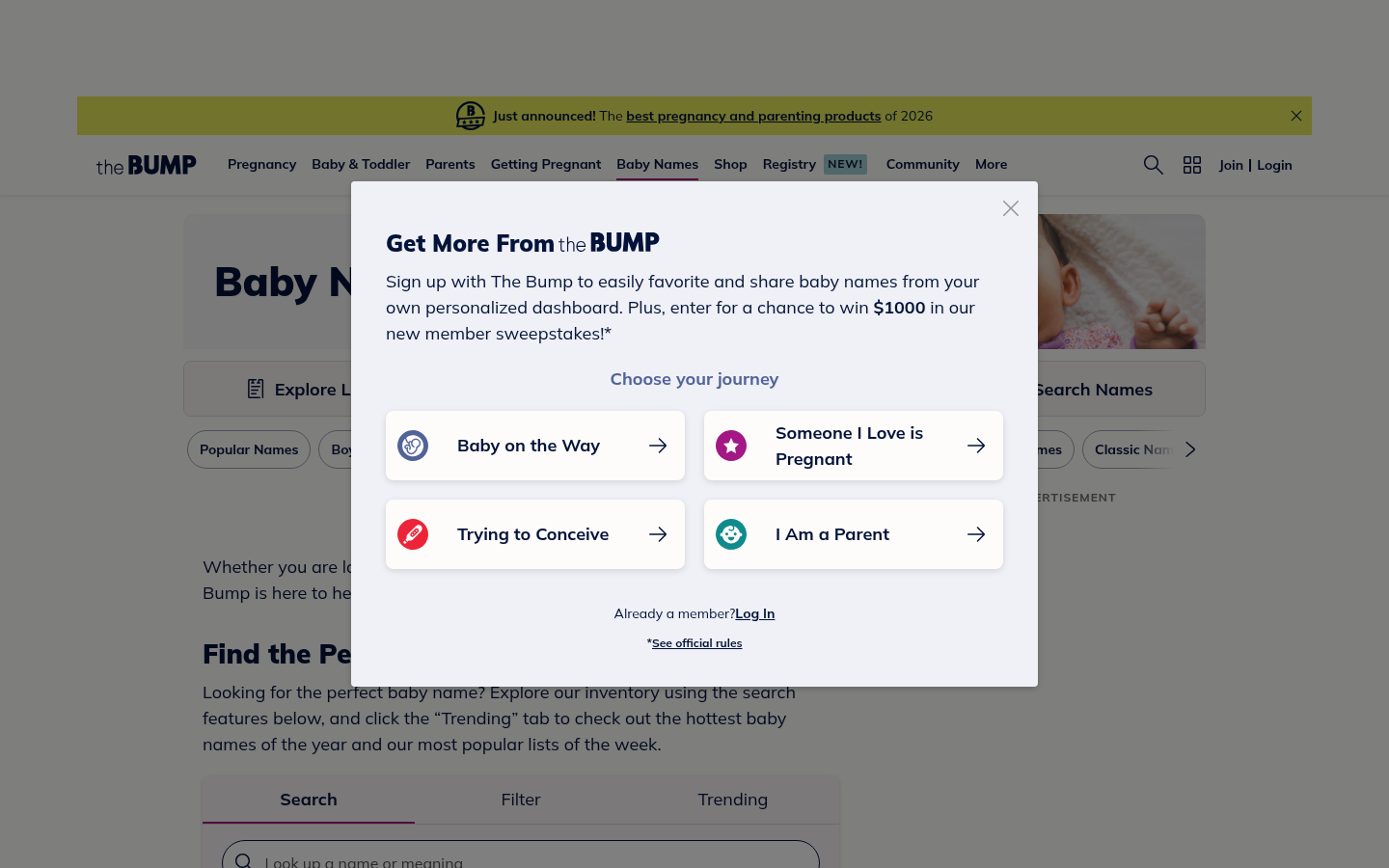
The Bump Baby Names Finder
- Filters go deeper than most: syllables, style, origin, plus rhyme and monogram checks
- Baby Name Matcher game pairs partner accounts and surfaces only the names you both loved
- Full-name preview against your actual surname, including a playground-popularity estimate
- Some list content overlaps with sister sites in the same parenting-media network
- Saving matches from the Matcher game requires creating a free account
The most complete practical toolkit for actually testing a name against your real surname.
BabyCenter Baby Names
- Swipe rating learns your taste and resurfaces genuinely similar names
- Add-your-surname preview shows how the full name actually flows before you decide
- Partner-code sharing makes it easy to compare two people's shortlists side by side
- Name entries are thinner on etymology than a dedicated reference site
- Ad load is heavier than most independent name sites
A solid all-in-one pick if you're already living inside the BabyCenter app for pregnancy tracking.
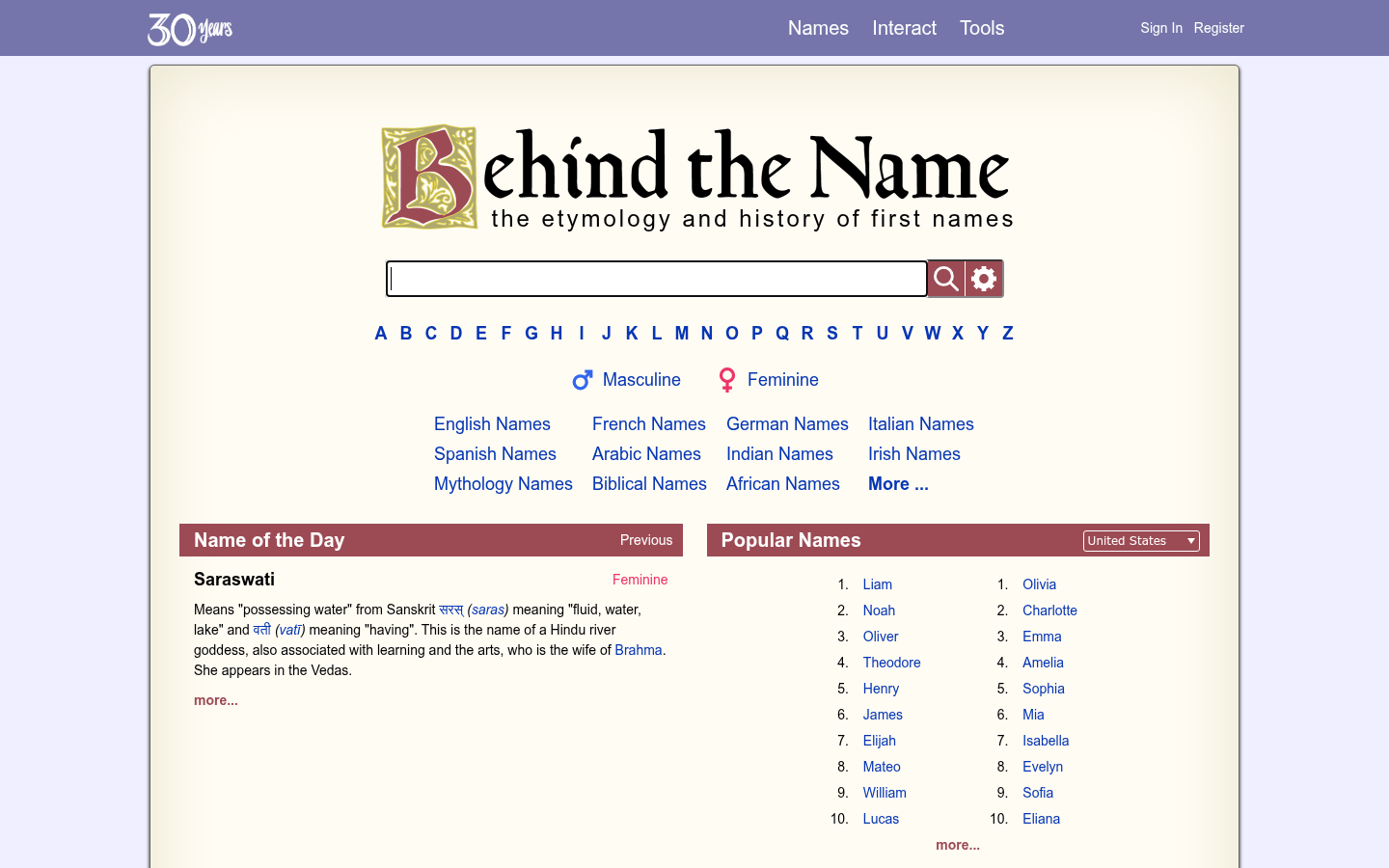
Behind the Name
- Linguist-maintained etymology for roughly 18,000 names since 1996, with sources and variants
- Cross-cultural variant mapping shows how one root name shifted across languages
- Popularity-by-country charts pull from official civil registries, not estimates
- Interface is dated and function-first, with no curated "browse by vibe" experience
- No swipe app or partner-matching feature for comparing picks with a co-parent
The one to open when you need to fact-check a meaning, not to discover new names.
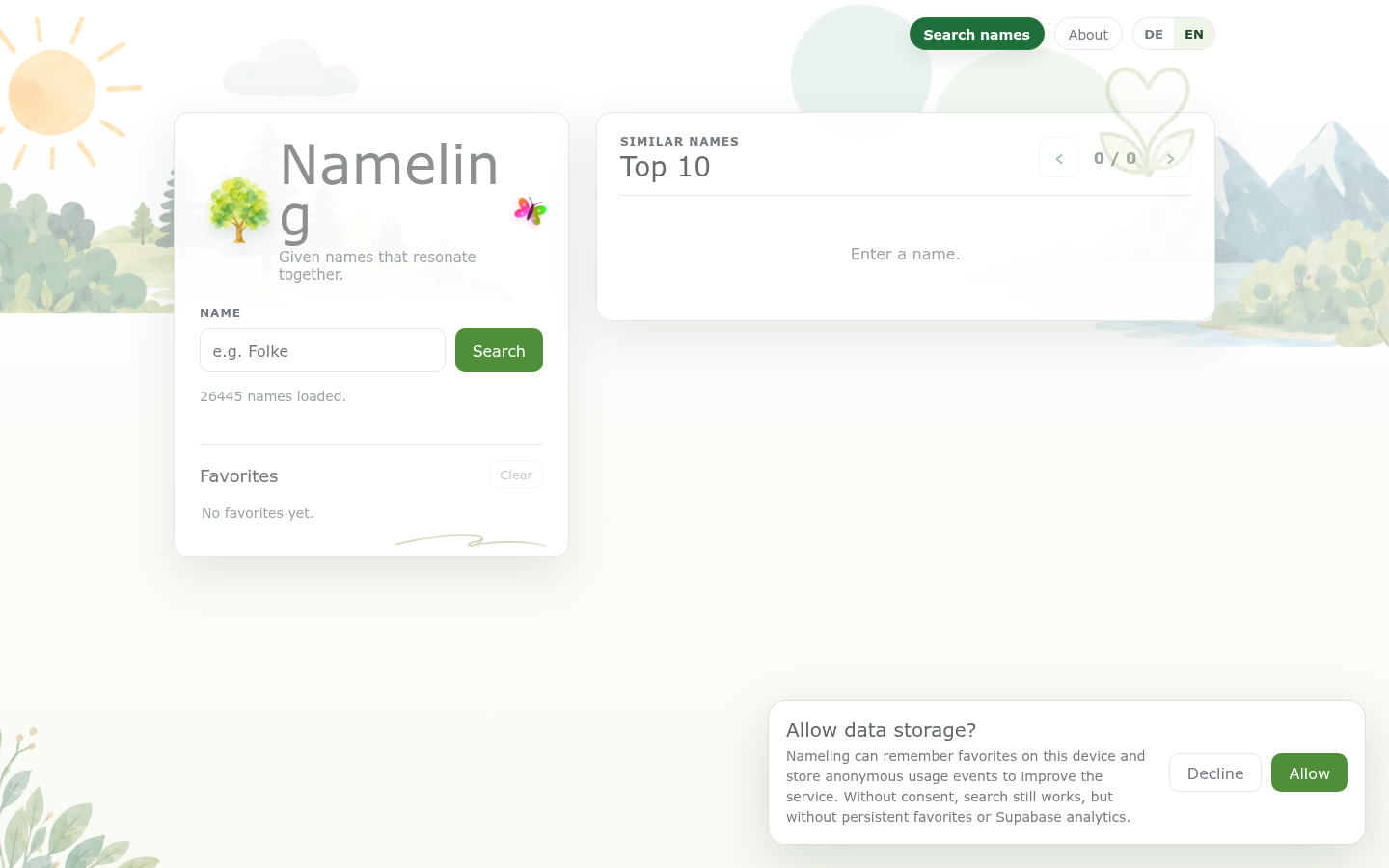
Nameling
- Algorithmic "find similar names" engine is built on real usage data, not alphabetical proximity
- No ads and no account wall, just a single search box that loads fast
- Useful when Nameberry's suggestions feel too editorial and you want a plainer signal
- No meanings, origin stories, or etymology at all on the name pages themselves
- Name coverage is smaller than the major commercial databases
- Development pace is slow, since it runs as a research project rather than a company
Pair it with a reference site; it's a discovery tool, not a one-stop name resource.
Verdict
Among these Nameberry alternatives, The Bump Baby Names Finder covers the widest range of real needs: deep filters, a free partner matcher, and practical checks like rhyme and monogram testing. Reach for Behind the Name when you need the etymology to be true, not just plausible, and for Nameling when you already have one name you love and want its closest relatives.
How we tested
We compared Nameberry against four alternatives (BabyCenter Baby Names, The Bump Baby Names Finder, Behind the Name, and Nameling) by running the same shortlist of twelve names through each tool and recording price, discovery method, partner-comparison support, and etymology depth. Feature and pricing claims were checked against each site's own current pages in August 2026. We did not accept vendor marketing copy at face value where a feature could be tested directly.